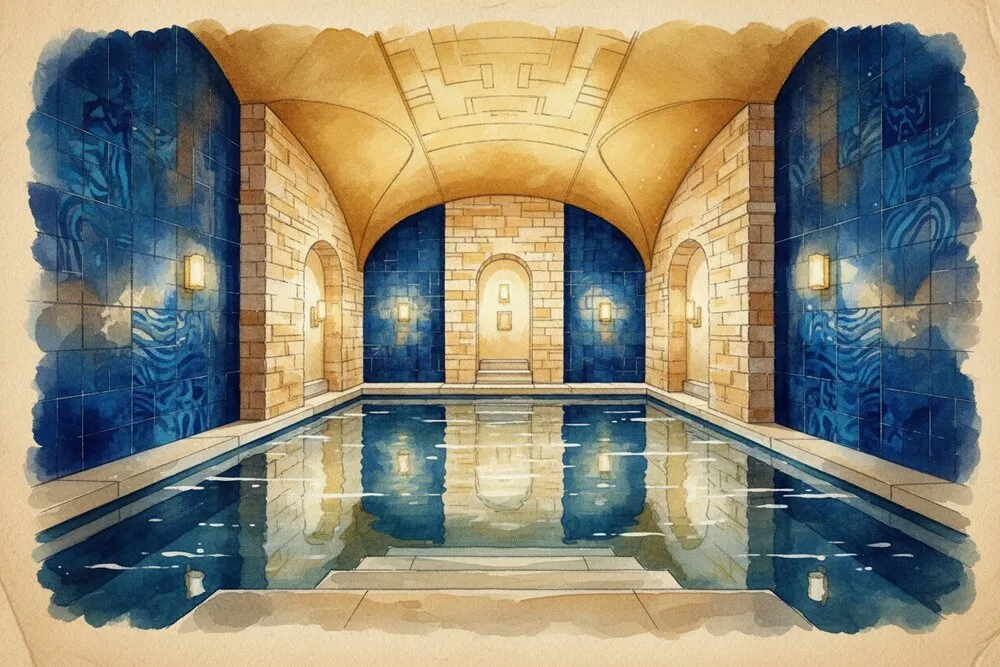
A mikvah (מקוה, plural: mikvaot) is a pool of natural water used for ritual immersion in Judaism. The word literally means “gathering” — a gathering of waters. It is one of the oldest and most fundamental institutions in Jewish life, predating the synagogue and even the Torah scroll.
The mikvah is not a bath for physical cleanliness. It is a spiritual instrument — a place of transformation and renewal. Immersion in a mikvah marks transitions: from impurity to purity, from the mundane to the sacred, from one state of being to another.
The Halachic Requirements
Jewish law (halacha) specifies precise requirements for a valid mikvah:
Water Source
The mikvah must contain a minimum of 40 se’ah (approximately 200 gallons / 750 liters) of naturally gathered water. This water must come from a natural source — rainwater, a spring, melted snow, or groundwater. It cannot be drawn, pumped, or carried by human hands into the main pool.
Construction
The mikvah must be built into the ground or into the structure of a building (not a portable vessel). The walls and floor must be sealed so that no water leaks out. Modern mikvaot use sophisticated plumbing systems that allow for clean, heated, filtered water while maintaining a halachic connection to the natural water source through a system called hashakah (kissing contact).
Immersion
The person immersing must be completely submerged — every part of the body, including all hair, must be under water simultaneously. Nothing may intervene between the body and the water (no bandages, jewelry, nail polish, etc. that would constitute a chatzitzah, or barrier).
Who Uses the Mikvah?
Family Purity (Taharat HaMishpacha)
The primary use of the mikvah in contemporary Jewish life relates to the laws of family purity. Jewish married women immerse in the mikvah monthly, marking the transition from a period of separation (niddah) to reunion with their husbands. This practice, rooted in Leviticus 15 and elaborated in the Talmud, has been observed continuously for over 3,000 years.
Conversion (Geirut)
Immersion in a mikvah is the final step in Jewish conversion. It represents a spiritual rebirth — emerging from the waters as a new member of the Jewish people.
Before Shabbat & Holidays
Many observant Jewish men immerse before Shabbat or major holidays as a spiritual preparation. In Hasidic communities, daily mikvah use is common.
New Vessels
Metal and glass utensils purchased from a non-Jewish manufacturer must be immersed in a mikvah before use (tevilat keilim). Many mikvaot have a separate small pool specifically for this purpose.
Torah Scrolls & Scribes
A sofer (scribe) traditionally immerses before writing a Torah scroll or other sacred documents.
The Spiritual Dimension
Water in Jewish thought represents the primordial state of creation (“and the spirit of God hovered over the waters” — Genesis 1:2). Immersion in water symbolizes a return to that original, undifferentiated state — and emergence from the water represents a new beginning, a fresh creation.
The mikvah is thus a place where the physical and spiritual intersect. The same water that sustains biological life also facilitates spiritual transformation. This is perhaps why Jewish law accords the mikvah such extraordinary priority — it is the infrastructure of renewal.
Modern Mikvaot
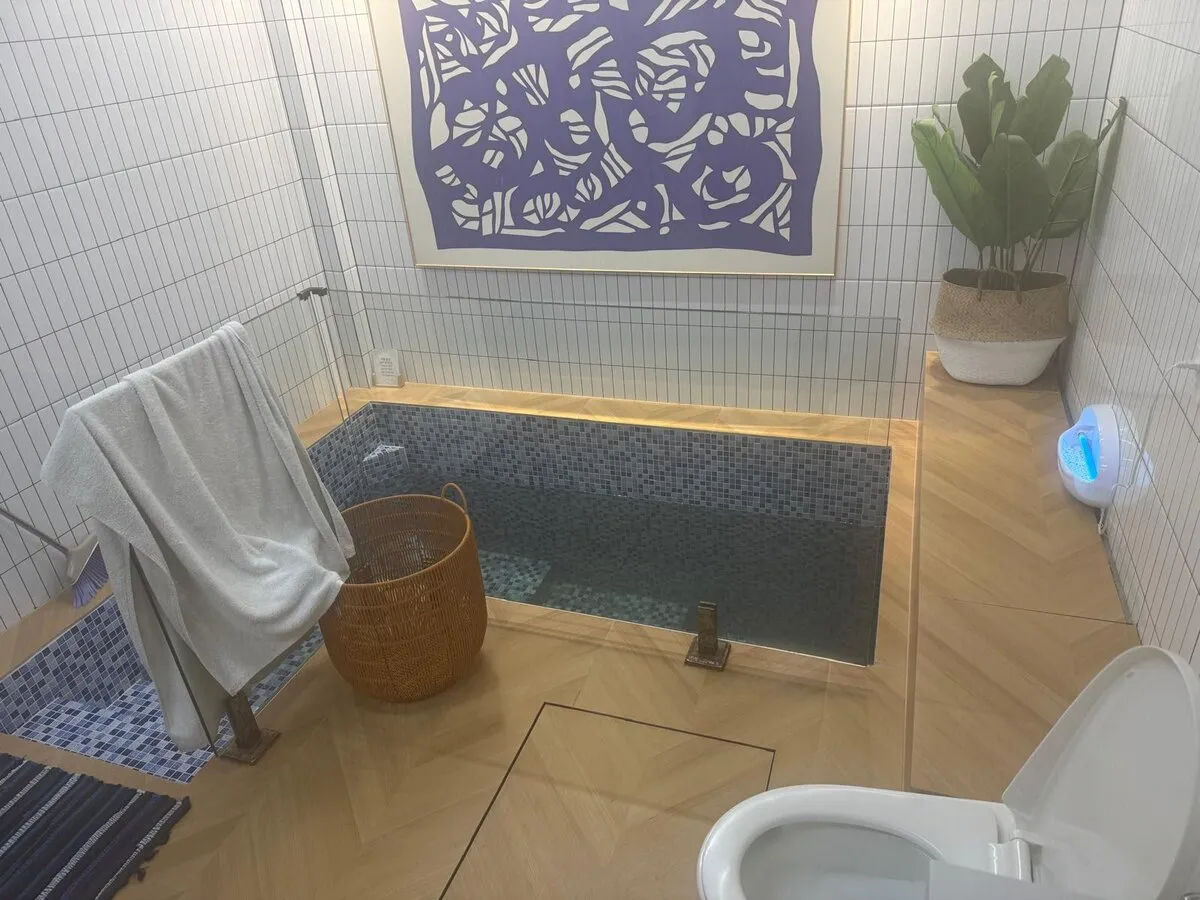
Today’s mikvaot are beautiful, spa-like facilities that combine ancient halachic requirements with modern comfort and dignity. A typical modern mikvah includes:
• Preparation rooms with showers, bathtubs, and vanities
• The mikvah pool itself, heated to a comfortable temperature
• Separate areas for men and women (or separate hours)
• A small pool for immersing vessels (keilim)
• Private, dignified, beautifully designed spaces
TRA builds every mikvah to these standards, ensuring that communities worldwide have access to facilities that honor both the halacha and the people who use them.